Redbubble Pakistan is a question with two answers, and most guides only give you the easy one. Yes, Redbubble is a real print-on-demand marketplace, and yes, a Pakistani artist can open a shop there and upload designs for free. But can you get paid? Redbubble pays through PayPal or a UK, Australian or US bank account only — and PayPal does not operate in Pakistan, a Pakistani bank is none of those three, and Payoneer is not supported. Before the fees and the tiers: the payout routes do not work for you.
That does not make Redbubble a scam. It is a genuine marketplace, founded in Melbourne in 2006 and listed on the Australian Securities Exchange, selling millions of designs on stickers, T-shirts, posters, phone cases and mugs. It does make it, for a Pakistani seller, a shop with no till. This guide gives the full verdict: how the money is supposed to work, what the tier fees take, when payouts happen, and what to do with your designs instead.
What Is Redbubble and How Do Artists Earn?
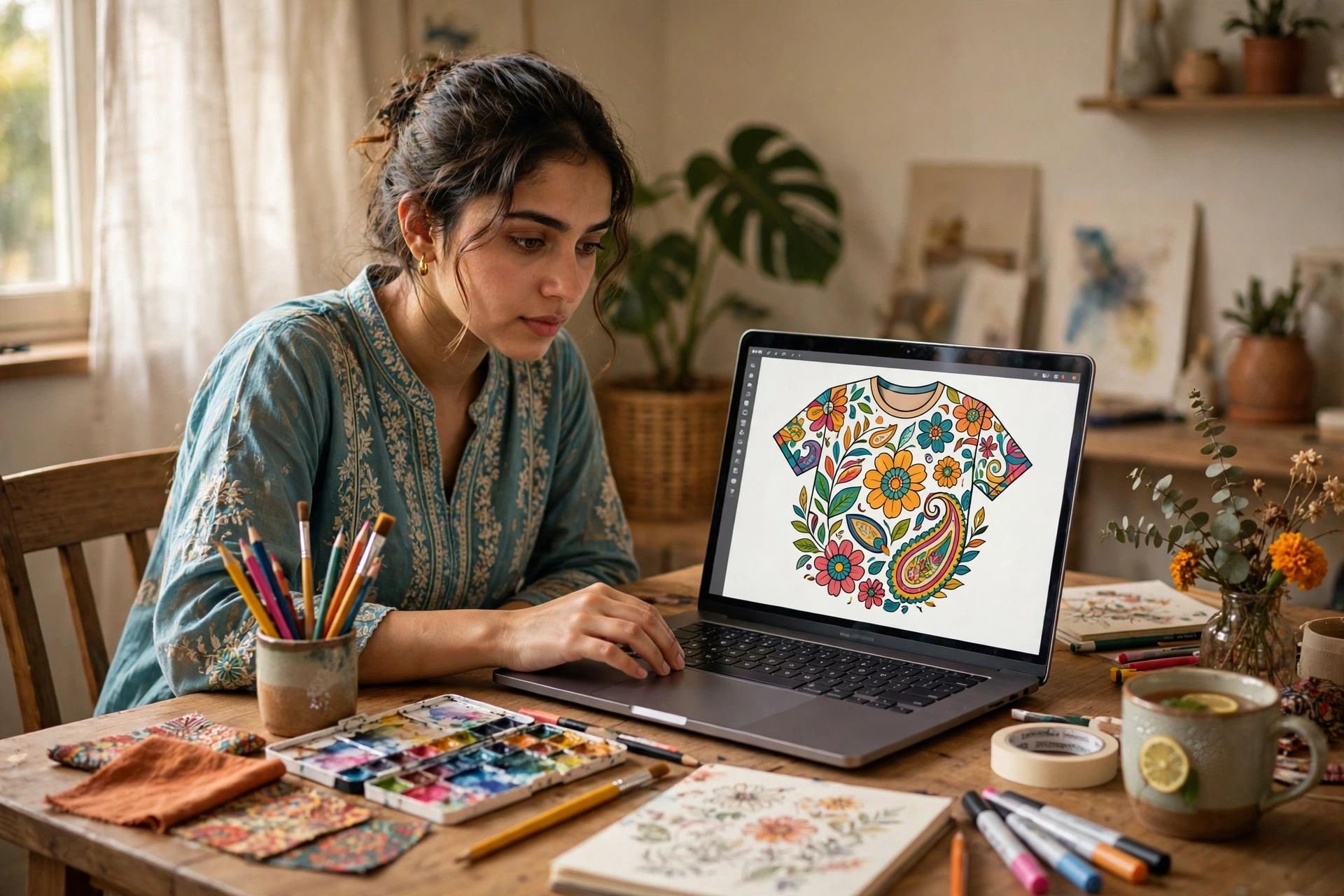
Redbubble is a print-on-demand marketplace. You upload a design; a customer buys it printed on a product; Redbubble handles printing, shipping and payment processing. Opening an account and uploading cost nothing. That zero-investment start is why it shows up in every “earn without investment” list in Pakistan — and why it deserves a harder look than most of those lists give it.
You earn through a markup. Every product has a base price set by Redbubble; on top of it you set your markup, and the markup is your margin. The default is 10% of the base price, adjustable per product on the Product Pricing page. On a $20 base price, the default 10% earns you $2 when it sells — before the fees below, which is why the default is only the starting point of the maths, never the answer.
A few ground rules first. You can upload up to 30 works a day across your accounts. Automated uploading with bots or scrapers is not allowed without Redbubble’s written permission. On AI designs, this guide will not invent a rule: Redbubble’s Community Guidelines govern AI uploads and mass uploading, so check the current guidelines before bulk-uploading AI designs.
The Tier Fees: What Redbubble Pakistan Artists Actually Keep
Here is the fact no rival guide mentions. Redbubble sorts artists into three tiers — Standard, Premium and Pro — and charges each a different platform fee on monthly earnings. The figures come from Redbubble’s own help article on account tiers, updated 31 July 2026.
| Account tier | Platform fee | How you get there | You keep on a $20 sale at 20% markup ($4 gross) |
|---|---|---|---|
| Standard | 50% | Assigned at classification | $2.00 |
| Premium | 20% | By Redbubble’s review — not by sales, not on request | $3.20 |
| Pro | No platform fee | Invite-only, top 1% by performance, reviewed yearly | $4.00 |
A new artist starts as Standard, and Standard hands half of monthly earnings to Redbubble as a platform fee. Premium keeps 80%, but you cannot ask for it, buy it, or earn it by hitting a sales target — Redbubble assigns it by review. Pro keeps everything, but it is invite-only for the top 1% of artists, reviewed once a year. For almost everyone reading this, the realistic tier is Standard, and the realistic fee is 50%.
There is a cap: total platform fees for Standard and Premium artists are capped at $150 — or €150 or £150 — per payment period. The cap helps high earners, but to hit a $150 fee as a Standard artist you need $300 of monthly earnings first, and on $2 kept per $20 sale, that is a long road. For a small seller the cap is a distant ceiling, not a safety net.
Then there is the excess markup fee, which punishes ambition. If you set a markup above 20%, Redbubble deducts a 50% excess markup fee from the gross earnings on the part above 20% — for Standard and Premium only; Pro is exempt. At or below 20% the fee does not apply. Redbubble’s own example is blunt: for Standard artists, earnings above a 20% markup go entirely toward fees until the $150 monthly fee cap is reached. Raising your markup past 20% as Standard does not raise what you keep — it raises what Redbubble keeps.
Put it together on one sale. A design on a $20 base price at 20% markup grosses $4. As Standard you keep $2; as Premium, $3.20; as Pro, the full $4. Nobody can quote you a monthly income from those numbers, because that depends on how many designs sell — and this guide refuses to invent a sales figure. The shape of the deal: half your earnings go to the platform, and the tiers that would change that are not yours to choose.
How and When Redbubble Pays — the $10 Threshold
The payout threshold is where the rival guides are visibly out of date. From 1 July 2026, Redbubble lowered the threshold from $20 to $10 — $10, £10 or €10, depending on your currency. That change is on Redbubble’s own blog, in a post about changes to yearly artist payments. The freshest rival guide found for this article, published 10 November 2026, still quotes the old $20 figure.
The payment cycle works like this. If your balance meets the $10 threshold by the end of a month, processing starts at the beginning of the next month and the payment should land by the 15th. Orders not shipped by month-end roll into the following cycle, so a late-month sale can wait an extra month. Cancelled orders are not paid at all. And one safety net is gone: the yearly payment was removed, so a below-threshold balance no longer gets paid out at year-end.
There is also an account fee trap. If your payment details are missing or invalid, Redbubble deducts account fees, and your remaining earnings can fall below the threshold — no payout even if you earned past $10 on paper. Adding valid details stops the fee, and the payment goes out in the next monthly run. For a Pakistani artist who cannot supply valid details at all, the trap is the normal state of the account.
The Pakistan Payout Problem: Three Doors, All Closed
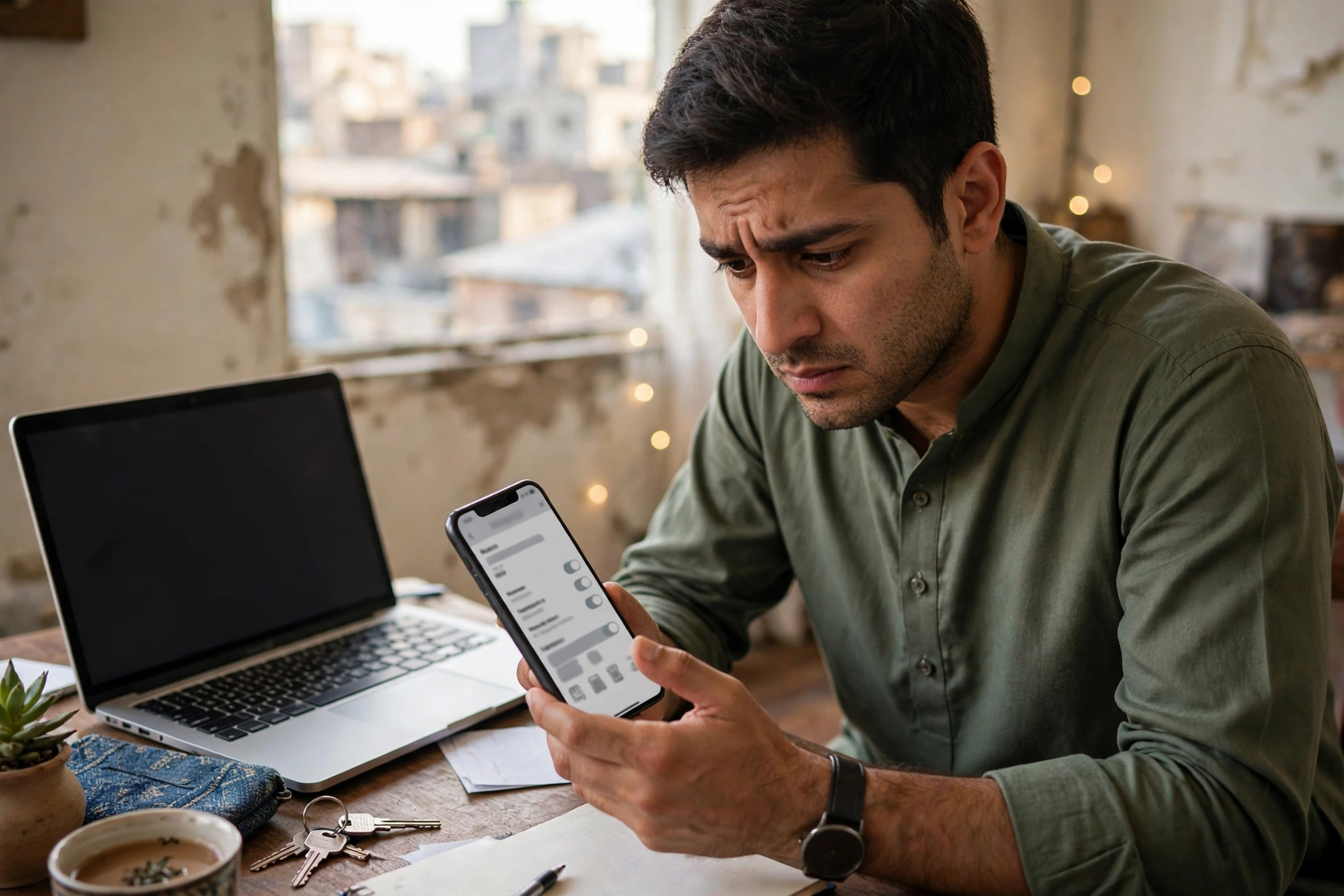
Redbubble’s own help article on avoiding the fee, updated 12 May 2026, lists exactly two kinds of payment details it accepts: a valid PayPal account, or a valid bank account — and the bank must be a UK, Australian or US bank. That is the whole list. Payoneer appears nowhere in Redbubble’s help pages as a payout method.
Now walk a Pakistani artist through those doors. Door one, PayPal: PayPal does not operate in Pakistan, so a Pakistani cannot receive a PayPal payout — this site’s PayPal in Pakistan guide gives the full proof. Door two, a bank account: a Pakistani bank is not a UK, Australian or US bank, so the bank route is closed too. Door three, Payoneer — the route that saves Pakistani sellers on almost every other platform: not a Redbubble payout method at all. Three doors, all closed, and no fourth one published.
What does that mean in practice? A Pakistani artist can open a shop, upload designs and build a balance. The shop works; the designs can sell. But there is no published way to withdraw the balance — and you cannot even sell until you have provided payment details, so the wall appears before the first sale. And the workarounds you will hear about are refused here, plainly: do not use a relative’s PayPal account, do not open a foreign bank account for this, and do not use a VPN or a foreign account to pretend to be somewhere you are not. Those routes break Redbubble’s verified-account rules and PayPal’s own rules, and a payout built on a borrowed identity is a payout that can be frozen, reversed or lost — along with the account.
The honest summary is short. Redbubble is legitimate, the designs can sell, the fees are published — and a Pakistani seller has no working payout route. That is not a reason to call the platform a scam. It is a reason to put your effort somewhere the money can reach you.
Redbubble vs Freepik vs Adobe Stock vs Shutterstock — Payout Routes for Pakistanis
Redbubble is not the only platform paying designers. The question is never just “does it pay?” — it is “does it pay a Pakistani, and through what?”
| Platform | What you sell | How you are paid | Minimum payout | Route that reaches Pakistan |
|---|---|---|---|---|
| Redbubble | Designs on print-on-demand products | Markup over base price; Standard keeps 50% after fees | $10 | None — PayPal or UK/AUS/US bank only; no Payoneer |
| Freepik | Vectors, photos, icons | 50% revenue share, per-download formula | Dashboard governs | PayPal listed — same Pakistan catch |
| Adobe Stock | Photos, vectors, video | 33% royalties on photos and vectors, 35% on video | $25, plus a 45-day wait | Payoneer — works for Pakistanis |
| Shutterstock | Photos, vectors, video | Royalty per download, by level | Dashboard governs | Payoneer and Skrill — see this site’s guide |
Adobe Stock is the clearest contrast: it publishes its royalty rate, openly accepts AI-declared work, and pays Pakistanis through Payoneer. This site’s Adobe Stock contributor guide covers the $25 payout and the 45-day wait. Freepik publishes a generous 50% revenue share, as this site’s Freepik contributor guide explains, but its payout page lists PayPal, the same dead end. Shutterstock’s payout routes for Pakistanis are covered in this site’s Shutterstock payout guide. And if your designs are templates, this site’s Canva earning guide covers royalties that reach Pakistan through Payoneer and Skrill — never PayPal.
The lesson: on every platform, check the payout method before the earning rate. A 50% share you cannot withdraw is worth less than a 33% royalty that lands in your bank through Payoneer. Redbubble’s rate is not the problem. Its payout list is.
What a Pakistani Artist Should Do Instead
None of this means your designs are worthless. It means Redbubble should not be where your main effort goes. If you already have a shop, keep it as a free portfolio — the payout picture could change one day. But do not build your income plan on it, or spend your best design hours feeding a balance you cannot withdraw.
First, sell the same skills where Payoneer works. Adobe Stock takes your photos, vectors and video at published royalty rates and pays through Payoneer; Shutterstock pays through Payoneer and Skrill. A clean vector that would sit on a Redbubble T-shirt is a stock vector too.
Second, sell directly. The same artwork that becomes a Redbubble sticker can become a product on Etsy, where this site’s Etsy seller guide covers setup and payment through Payoneer. Etsy charges a $0.20 listing fee plus 6.5% per sale, and you set your own price — no tier takes half your earnings. It is slower to start, but the money has a route home.
Third, sell the skill, not just the file. Freelance design work — logos, social media posts, menus, wedding cards — pays a client directly, this week, at a price you agree, and this site’s Canva guide covers that route. A single local client paying Rs 10,000 a month for posts beats a Redbubble balance you cannot withdraw. Set up Skrill or Payoneer first — this site’s Skrill guide covers the Skrill route — so the account is ready before the money. If Redbubble ever adds Payoneer, this verdict changes overnight; until then, treat Redbubble as a free shop window, not a pay cheque.
What the Rival Guides Get Wrong
Three corrections, because the top results for this keyword are wrong in ways that cost readers time. The freshest rival, lionvaplus.com, was published on 10 November 2026 — yesterday — and still quotes the old $20 threshold. Redbubble lowered it to $10 on 1 July 2026.
The second rival, thegeniuscat.com, dated 25 November 2025, is wrong twice: it still quotes the $20 threshold, and it says the default markup is 20%. The default is 10%, confirmed by three agreeing 2026 guides that read Redbubble’s help pages. A reader who follows the old figure will set prices wrong from the first upload.
The third, inkedjoy.com, is the generic “is Redbubble legit” guide. It never mentions the tier fees, never mentions the 50% Standard platform fee, and never asks the Pakistan question at all. A guide that calls a platform legitimate without checking whether you can be paid is a reassurance, not a guide.
The Scam Filter for Redbubble Earning
Redbubble’s name attracts the usual earning-scam industry, and the same five tests from this site’s other guides catch it. Does it ask you to pay to join, activate, or unlock withdrawals? Opening an account and uploading are free — any fee is a scam. Does it promise a fixed income — “Rs 50,000 a month, guaranteed”? No real route guarantees income. Does it quote a payout rate or threshold as if current? Check Redbubble’s own help pages — the threshold and tier fees both changed in July 2026. Does it sell you a “verified” account, a foreign PayPal, or a VPN trick to unlock payouts? That is a borrowed identity, not a business, and it can cost you the account and the balance. Does it ask for your CNIC photo, OTP or bank password? No legitimate platform asks for your OTP, ever.
If an offer fails any test, report it to the NCCIA (1799) or PTA (0800-55055). If you already paid, stop paying and keep every receipt. The first defence is the same: check the platform’s own pages before you believe anyone’s summary of them.
Frequently Asked Questions About Redbubble Pakistan
Can Pakistanis sell on Redbubble? Yes — a Pakistani artist can open a shop and upload designs for free, and customers anywhere can buy them. Selling is not the problem. Getting paid is: Redbubble pays only via PayPal or a UK, Australian or US bank account; Payoneer is not supported.
Can you get paid from Redbubble in Pakistan? Not through any published route. PayPal does not operate in Pakistan, a Pakistani bank is not a UK, Australian or US bank, and Payoneer is not a Redbubble payout method.
What is Redbubble’s payout threshold in 2026? $10 — lowered from $20 on 1 July 2026. Meet it by month-end and processing starts at the beginning of the next month, with payment landing by the 15th.
How much does Redbubble take from artists? Standard artists pay a 50% platform fee on monthly earnings, Premium 20%, Pro none — capped at $150 per payment period for Standard and Premium. A 50% excess markup fee also applies above a 20% markup. A Standard artist on a $20 sale at 20% markup keeps $2 of the $4 gross.
Does Redbubble pay through Payoneer? No. Payoneer appears nowhere in Redbubble’s help pages as a payout method. Redbubble accepts exactly two kinds of payment details: a valid PayPal account, or a valid bank account with a UK, Australian or US bank.
What should Pakistani artists use instead of Redbubble? Platforms whose payouts reach Pakistan through Payoneer: Adobe Stock (33% royalties, $25 payout) and Shutterstock (Payoneer and Skrill) for stock work, Etsy for selling designs directly, and freelance design through Canva for the fastest first income. Keep Redbubble only as a free portfolio.
Related Tools & Guides
- Freepik Contributor Pakistan: Sell Designs Without Investment (2026 Guide) — 50% revenue share, same PayPal catch.
- Adobe Stock Contributor Pakistan: Payout, Royalties & AI Rules (2026 Guide) — 33% royalties, $25 payout, Payoneer works.
- Shutterstock Payout Pakistan: Payoneer, Tax Form & Minimums (2026 Guide) — Payoneer and Skrill routes.
- Canva Earning in Pakistan: Can You Earn from Canva? (2026 Guide) — royalties and freelance design that reach Pakistan.
- PayPal in Pakistan: Why You Can’t Use It & What Works Instead (2026 Guide) — proof PayPal cannot pay you.
- Skrill in Pakistan: How to Set Up, Receive & Withdraw (2026 Guide) — the receiving account for these payouts.
- Etsy Pakistan: How to Sell and Get Paid (2026 Guide) — sell designs directly, paid via Payoneer.



Leave a Reply